
Muskrat fur and Pelt
- XL
- Clear all
-

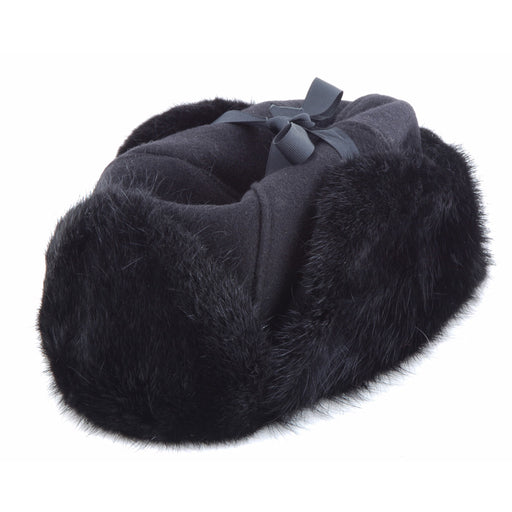
Mountie Style Dyed Black Muskrat
Original price $189.50 - Original price $189.50Original price $189.50$189.50$189.50 - $189.50Current price $189.50Mountie Style Hats Features a melton top with fur trim. Small - 21 1/2" - 21 7/8" Medium - 22 1/4" - 22 5/8" Large - 23" - 23 1/2" XL - 23 7/8" - 2...
View full detailsOriginal price $189.50 - Original price $189.50Original price $189.50$189.50$189.50 - $189.50Current price $189.50

The muskrat is larger size rodent, flattened scaly tail flattened from the sides, and taller and thicker fur. Like all semi-aquatic dwellers, it has a well-developed hair cover, the density and height of which reduces the heat loss of the body in water.
Description of fur
The length of its pelts varies from 25 to 35 cm. Only rarely do hunters come across animals as long as 40 cm. The hair consists of a shiny, thick coat about 25 mm long on the backbone and 20 mm on the belly, as well as a thick downy coat about 17 mm long on the backbone and 15 mm long on the belly. There are 8 to 16 thousand hairs per square centimetre.
Under the influence of environmental conditions, muskrat inhabiting different regions of the country have developed distinctive features that manifest themselves in differences in size, color and density of fur of different animals.
In this connection, the color of the coat varies from dark brown, sometimes dark gray, to light brown with a golden tint on the sides. The literature describes cases of animals caught with practically black fur.
Its molt takes a very long time. It begins in May and ends only at the end of winter. In early spring, the pelt is at its best, but because of the breeding period, it is not harvested.
In young animals, due to different birth dates within one year, the age molt does not coincide with the seasonal molt. That is why animals caught by hunters at the same time have a different degree of cover change.
From muskrat fur, natural or tinted (dyed) sew hats and beautiful warm coats.